
Preserving Family Stories: Creating Lasting Connections
Over 80 percent of American families say their most meaningful memories are tied to stories shared during special occasions like anniversaries and holidays. Preserving these stories goes beyond simple keepsakes, helping build stronger connections across generations. Discover how personalized home decor can turn everyday spaces into living archives, letting your unique family history shine for everyone who walks through your door.
Table of Contents
- What Preserving Family Stories Means
- Popular Ways to Capture Family Memories
- Personalized Decor For Storytelling At Home
- Involving Multiple Generations In The Process
- Common Mistakes When Documenting Family Stories
Key Takeaways
| Point | Details |
|---|---|
| Cultural Transmission | Preserving family stories fosters cultural connections across generations through shared narratives. |
| Diverse Methods | Utilize a mix of oral interviews, written memoirs, and digital archives for effective memory preservation. |
| Intergenerational Engagement | Involve family members of all ages in storytelling to enhance emotional resilience and understanding. |
| Avoiding Mistakes | Recognize common documentation errors to ensure comprehensive and meaningful family narratives. |
What Preserving Family Stories Means
Preserving family stories is more than simply recording memories. It represents an intricate, deeply meaningful process of cultural transmission that connects generations through shared narratives and experiences. Co-constructive intergenerational practices reveal how storytelling becomes a dynamic interaction where both storytellers and listeners actively collaborate to discover, interpret, and reconstruct family narratives.
At its core, family story preservation involves capturing lived experiences, personal histories, and generational wisdom through various methods like oral interviews, recorded conversations, written memoirs, and digital archives. These storytelling approaches do more than document events - they create a living, breathing representation of a family’s unique identity and journey. The Library of Congress Veterans History Project exemplifies how systematic documentation can transform individual memories into powerful historical records that connect past, present, and future generations.
Successful family story preservation requires intentional practices that honor individual perspectives while weaving a collective narrative. This might involve gathering relatives for structured storytelling sessions, creating family history books, digitizing old photographs, or hosting multi-generational conversations that invite each family member to share their unique insights. The goal is not just recording facts, but capturing the emotional landscape, personal challenges, triumphs, and transformative moments that define a family’s shared experience.
Pro tip: Start your family story preservation project by interviewing the oldest living relatives and recording their memories using both audio and video to capture nuanced details and emotional context.
Popular Ways to Capture Family Memories
Preserving family memories has evolved beyond traditional photo albums, offering families creative and engaging methods to document their unique stories. Modern memory preservation techniques include diverse approaches that make capturing personal histories both accessible and meaningful. From digital platforms to hands-on crafting, families now have unprecedented opportunities to chronicle their experiences across generations.
Traditional methods like journaling and scrapbooking remain powerful tools for memory preservation, complemented by technological innovations that expand storytelling possibilities. Organized photo collections and digitized archives allow families to safeguard visual narratives while creating interactive, shareable memories. These approaches range from creating personalized family cookbooks and constructing detailed family trees to recording oral histories that capture voices, emotions, and personal perspectives often lost in written documentation.
Technological advancements have significantly transformed memory preservation, introducing digital platforms that enable more dynamic and collaborative storytelling. Families can now create multimedia family history projects using video interviews, cloud-based photo repositories, genealogy websites, and interactive digital scrapbooks. These modern methods not only preserve memories but also make them easily accessible to younger generations, ensuring that family stories remain vivid, engaging, and personally meaningful.
Pro tip: Create a dedicated digital folder or cloud storage system where family members can continuously contribute and update shared memories, ensuring ongoing preservation and accessibility.
Here’s a comparison of memory preservation methods and their unique strengths:
| Method | Key Strength | Best For |
|---|---|---|
| Oral Interviews | Emotional depth, nuance | Capturing lived experiences |
| Written Memoirs | Detailed chronology | Documenting timelines |
| Photo Archives | Visual storytelling | Sharing generational images |
| Digital Platforms | Easy accessibility | Collaborative projects |
Personalized Decor for Storytelling at Home
Storytelling decor transforms living spaces from mere rooms into deeply personal narratives that celebrate family history and connection. Emerging design trends reveal how intentional home styling can turn everyday spaces into personal museums that reflect a family’s unique journey. By carefully curating meaningful objects, photographs, and artwork, families can create immersive environments that invite conversation and preserve cherished memories.
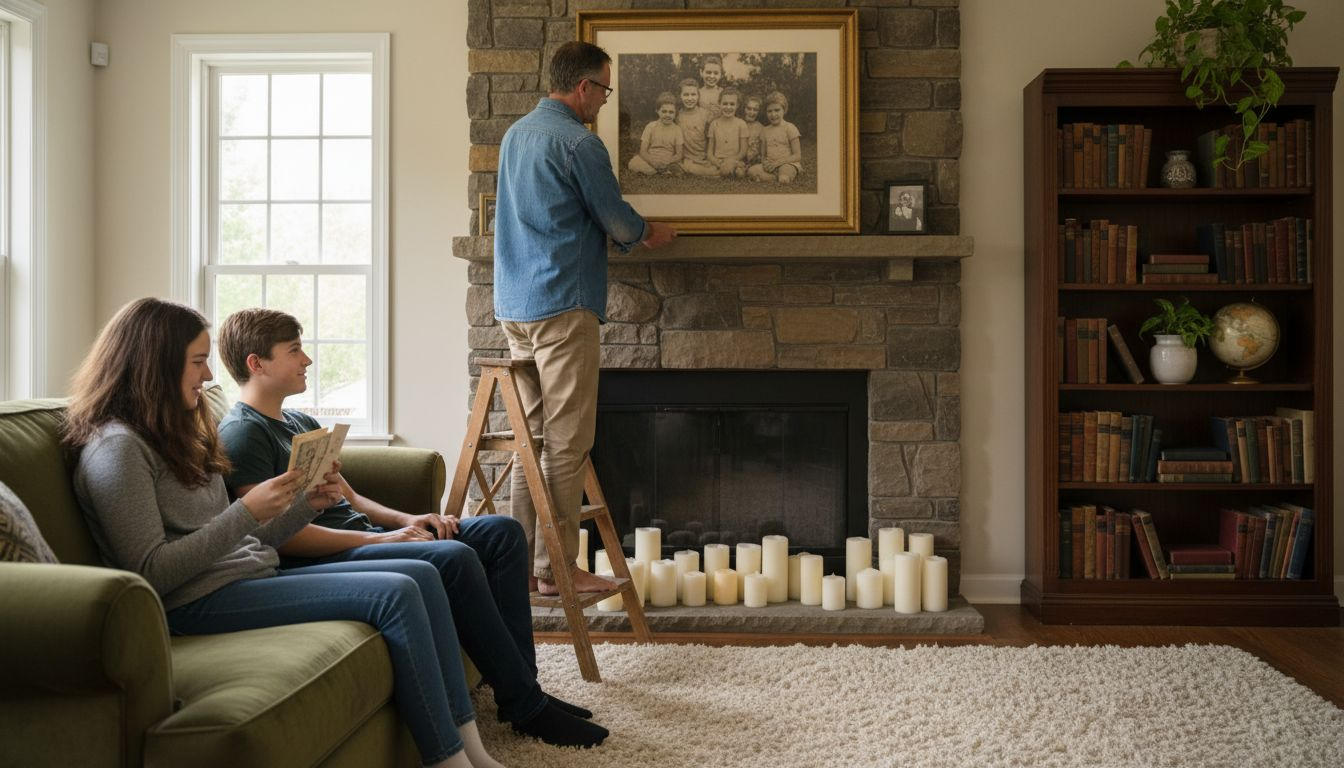
The art of personalized decor extends beyond simple decoration, focusing on strategic placement and meaningful selection of items that represent significant life moments. Custom artwork and intentional object placement allow families to blend modern aesthetics with vintage artifacts, creating focal points that naturally spark storytelling. These carefully chosen elements might include generations-old heirlooms, childhood artwork, travel mementos, or family photographs that collectively weave a rich tapestry of shared experiences.
Successful storytelling decor requires a thoughtful approach that balances aesthetic appeal with emotional significance. Families can create dedicated gallery walls, design memory shelves, or incorporate custom pieces that highlight important milestones and relationships. The goal is to design spaces that not only look beautiful but also serve as interactive archives of family history, inviting relatives and guests to explore and connect with the stories embedded within each carefully selected piece.
Pro tip: Create a rotating display area where family members can periodically swap out and share different meaningful objects, ensuring your home’s narrative remains dynamic and engaging.
Involving Multiple Generations in the Process
Intergenerational storytelling represents a powerful mechanism for preserving family heritage and building deep emotional connections across age groups. Multigenerational approaches to sharing life stories demonstrate profound benefits beyond simple information transfer, creating opportunities for emotional resilience and profound mutual understanding. By intentionally creating spaces and moments where different generations can interact and share experiences, families can develop rich, nuanced narratives that honor individual perspectives while reinforcing collective identity.
Successful multigenerational storytelling requires deliberate strategies that make participants of all ages feel valued and heard. This might involve structured family interviews, collaborative memory projects, or technology-enabled sharing platforms that bridge generational communication gaps. Grandparents can share historical context and personal experiences, while younger family members contribute contemporary perspectives and technological skills, creating a dynamic, interactive storytelling environment that respects and celebrates each generation’s unique contributions.
Technology and creative engagement techniques can significantly enhance intergenerational storytelling experiences. Digital tools like shared online albums, video recording platforms, and interactive family history websites provide accessible ways for family members to contribute, explore, and preserve their collective narrative. These approaches transform storytelling from a passive listening experience into an active, collaborative process that encourages empathy, understanding, and genuine connection across age groups.
Pro tip: Schedule regular family storytelling sessions where each generation takes turns sharing memories, ensuring everyone has an opportunity to contribute and learn from one another.
Common Mistakes When Documenting Family Stories
Family storytelling requires careful attention to detail and intentional documentation strategies. Common documentation pitfalls can significantly undermine the quality and preservation of family narratives, making it crucial to understand and avoid typical errors that compromise storytelling effectiveness. By recognizing these potential mistakes, families can develop more robust and meaningful approaches to capturing their collective history.
Narrative structure and comprehensive documentation are essential components often overlooked by amateur family historians. Frequent mistakes include narrowly focusing on genealogical details, neglecting to invite multiple family perspectives, and failing to provide proper context for stories. Skipping critical steps like labeling photographs, organizing interview materials, and obtaining comprehensive background information can result in fragmented and incomplete family narratives that lose their emotional resonance and historical significance.
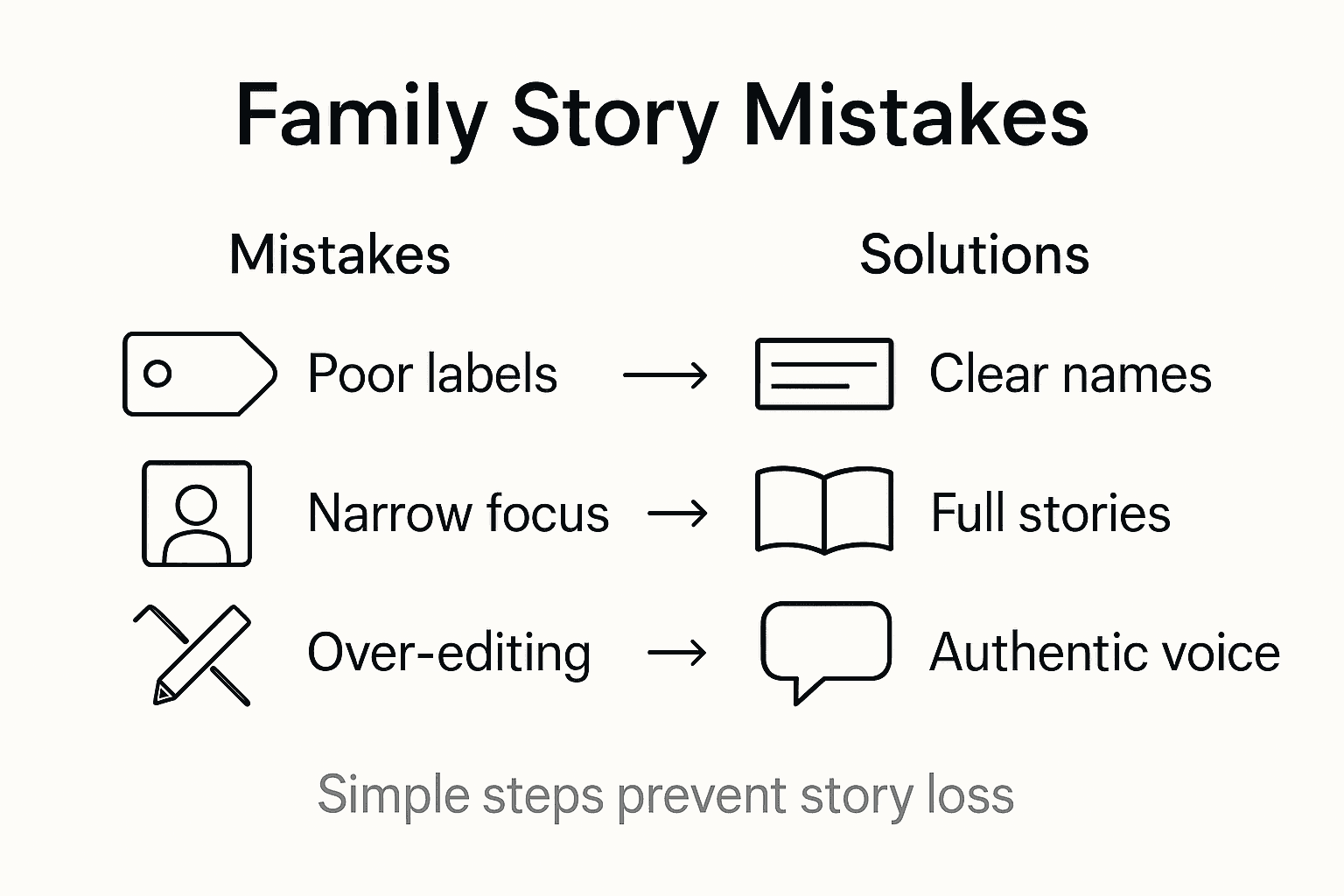
Technological and ethical considerations also play significant roles in effective family story documentation. Families often make the mistake of over-editing personal accounts, which can strip away authenticity and emotional nuance. Additionally, overlooking digital preservation techniques, failing to back up recordings, and not obtaining proper permissions from storytellers can lead to irretrievable loss of precious family memories. Successful documentation requires a balanced approach that respects individual privacy, captures genuine experiences, and creates accessible, engaging narratives that can be shared across generations.
Pro tip: Create a standardized family documentation template with key questions and consistent recording methods to ensure comprehensive and uniform storytelling across different family members.
Consider these common pitfalls and how to avoid them during family documentation:
| Mistake | Impact | How to Prevent |
|---|---|---|
| Narrow genealogical focus | Loss of context, connection | Include diverse stories |
| Poor labeling and organization | Confusing, fragmented records | Use clear labels, indexes |
| Over-editing personal accounts | Reduced authenticity | Preserve original voices |
| Ignoring digital backups | Risk of data loss | Regularly back up files |
Bring Your Family Stories to Life with Personalized Decor
Preserving family stories means capturing the emotional depth and unique journeys that connect generations. If you want to transform those precious memories into tangible heirlooms that spark conversation and keep your family’s heritage alive, personalized home decor offers a beautiful solution. At FunLifeNow, we specialize in crafting custom-made blankets, canvas wall art, and metal signs that tell your family’s story with quality American-made craftsmanship and thoughtful personalization.
Don’t let your cherished family narratives fade with time. Explore our collection of meaningful story-driven decor pieces that allow you to celebrate milestones and create a living archive right in your home. Start your personalization journey today by visiting FunLifeNow and see how you can turn everyday spaces into heartfelt storytellers. Make your memories last forever with customizable gifts and home accents designed to honor your family’s unique history. Act now to capture those lasting connections in a way your whole family will treasure.
Frequently Asked Questions
What are effective methods for preserving family stories?
Effective methods include oral interviews, written memoirs, recorded conversations, and creating digital archives. These approaches help capture personal histories and shared narratives.
How can I involve multiple generations in family storytelling?
Involve multiple generations by scheduling regular storytelling sessions where each generation shares their memories. Use collaborative projects and digital tools to enhance interaction and engagement.
What common mistakes should I avoid when documenting family stories?
Common mistakes include having a narrow focus on genealogical details, poor labeling of materials, over-editing personal accounts, and neglecting to back up digital recordings. It’s essential to provide context and gather diverse perspectives.
What are the benefits of using technology in preserving family memories?
Technology enhances accessibility and collaboration in memory preservation. With tools like shared online albums and video platforms, families can create dynamic projects that ensure stories are preserved and easily shared across generations.