
How to Select Wall Colors for Personalized Home Decor
Most American homeowners underestimate how much lighting and color impact their emotional connection to each room. Personalizing your wall colors goes far beyond basic paint chips—it’s about crafting a space that truly reflects your character and story. With over 90 percent of people saying their home decor influences how they feel daily, understanding how to match custom colors with your unique space and decor can transform the experience of coming home into something memorable and meaningful.
Table of Contents
- Step 1: Assess Lighting and Room Size
- Step 2: Identify Emotional and Storytelling Goals
- Step 3: Match Colors with Decor and Personal Themes
- Step 4: Test Color Samples on Your Wall
- Step 5: Finalize Your Wall Color Choice
Quick Summary
| Key Insight | Explanation |
|---|---|
| 1. Assess Your Lighting Type | Understanding the natural light source will affect how wall colors appear in your space. |
| 2. Consider Room Size | Smaller rooms benefit from light colors, while larger spaces can handle deeper tones. |
| 3. Reflect Your Emotions | Choose colors that evoke desired feelings and resonate with your personal story. |
| 4. Test Color Samples | Apply samples directly on walls to see how colors interact with light and surroundings. |
| 5. Finalize Thoughtfully | Review color performance throughout the day and ensure alignment with room purpose. |
Step 1: Assess Lighting and Room Size
Understanding how lighting interacts with wall colors and room dimensions is crucial for creating a personalized home decor experience. Lighting design experts recommend analyzing the specific characteristics of your space to make informed color selection decisions that enhance both aesthetic appeal and visual comfort.
Start by examining the natural light sources in your room. Walk around and note where sunlight enters during different times of the day. South-facing rooms typically receive warm, consistent light throughout the day, while north-facing spaces tend to have cooler, more muted illumination. Pay attention to window sizes, nearby obstacles that might block light, and the room’s overall orientation. These factors will significantly influence how wall colors appear and how they interact with both natural and artificial lighting.
Measure your room’s dimensions carefully and consider the scale of your space. The National Lighting Bureau emphasizes the importance of understanding room proportions when designing lighting and color schemes. Smaller rooms benefit from lighter wall colors that reflect more light and create an illusion of spaciousness, while larger rooms can handle deeper, more saturated tones without feeling closed in. Take precise measurements of wall lengths, ceiling height, and the total square footage to help you make strategic color choices that complement your room’s unique architectural characteristics.
Pro tip: Use a light meter app on your smartphone to get precise measurements of natural and artificial light levels in different areas of your room, helping you make more informed color selection decisions.
Here’s a concise summary of how room characteristics influence wall color choices:
| Room Aspect | Influence on Color | Design Consideration |
|---|---|---|
| Natural Light Source | Alters color warmth | South-facing suits warm, bright hues |
| Room Size | Changes perception | Small rooms need light, airy colors |
| Window Size/Obstacles | Affects brightness | Large windows allow deeper tones |
| Ceiling Height | Impacts spaciousness | Tall ceilings suit darker shades |
Step 2: Identify Emotional and Storytelling Goals
Selecting wall colors goes far beyond aesthetic preference it is about creating a meaningful narrative within your living space. Contemporary color theory in interior design reveals that colors are powerful communicators of emotion and personal experience, transforming walls into canvases that reflect your unique story.
Begin by reflecting on the emotional atmosphere you want to create in each room. Think about the feelings and memories you want to evoke. A home office might benefit from colors that inspire focus and creativity, such as calming blues or energizing greens. A bedroom could use soft, soothing tones that promote relaxation and tranquility. Consider the psychological impact of different color families how warm tones like yellows and oranges can create a sense of comfort, while cool blues and greens can provide a sense of calm and spaciousness.
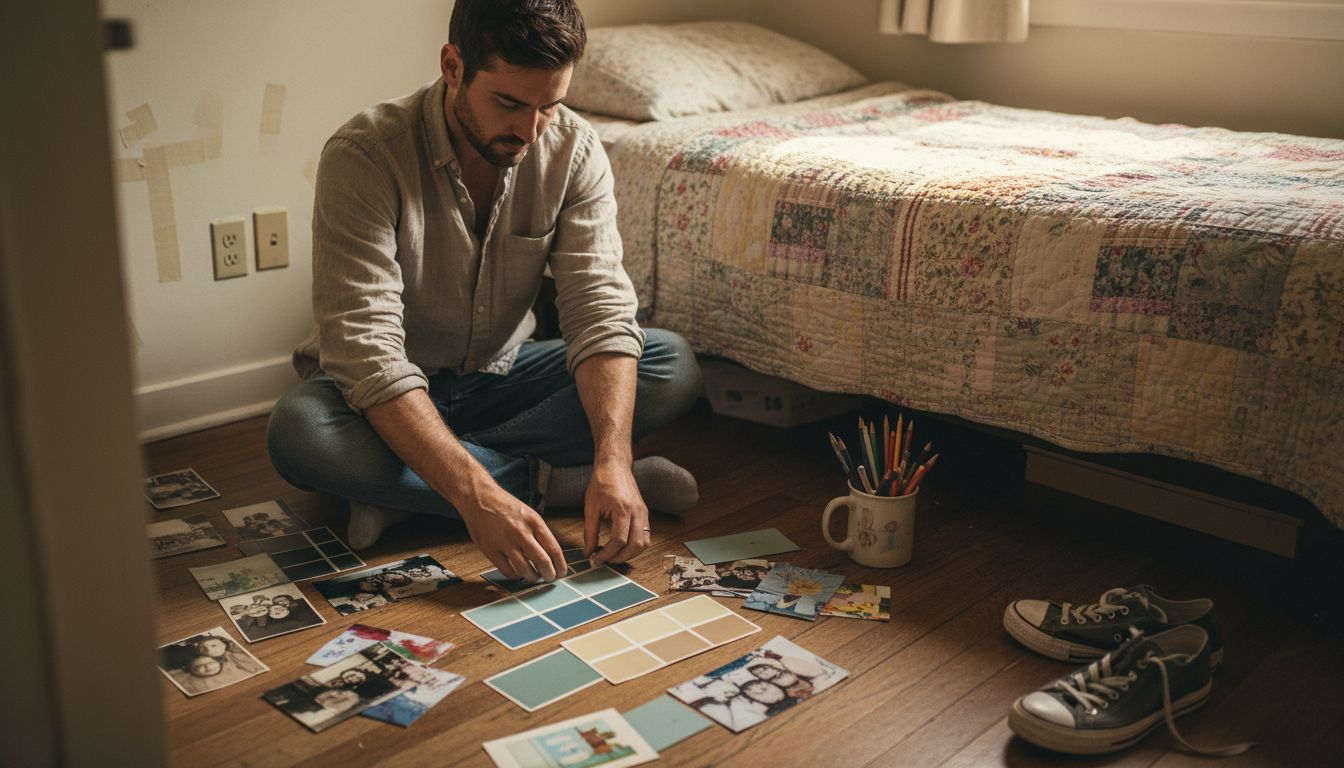
Take time to gather personal artifacts, photographs, artwork, or meaningful objects that represent the story you want your space to tell. These items can serve as color inspiration and help you develop a cohesive palette that resonates with your personal narrative. Think about the experiences, travels, or significant life moments that have shaped you and how you might translate those emotions into color choices that speak to your individual journey.
Pro tip: Create a mood board with color swatches, photographs, and meaningful objects to visually map out the emotional landscape you want to create in your space.
Step 3: Match Colors with Decor and Personal Themes
Integrating wall colors with existing decor requires a strategic approach to color harmony that transforms your space into a cohesive and meaningful environment. Understanding how different colors interact with your furniture, artwork, and personal artifacts is crucial to creating a unified design narrative.
Start by taking an inventory of your existing decor pieces. Look at the predominant colors in your furniture, rugs, curtains, and artwork. Identify the undertones these pieces carry warm browns, cool grays, vibrant patterns or muted textures. Your wall color should complement these elements rather than compete with them. For instance, if you have furniture with warm wooden tones, consider wall colors in soft terracotta, warm beige, or muted gold that will enhance those natural wood elements.
Consider your personal themes and lifestyle when selecting wall colors. A travel enthusiast might draw inspiration from global color palettes reflecting memorable journeys. An art lover could choose wall colors that provide a neutral backdrop for showcasing unique pieces. If your decor includes personalized home accents, select wall colors that allow these meaningful items to stand out and tell their stories. The goal is to create a harmonious backdrop that supports and elevates your personal style and cherished belongings.
Pro tip: Collect paint swatches and tape them next to your existing decor to see how different colors interact under various lighting conditions before making a final selection.
Step 4: Test Color Samples on Your Wall
Standardized paint testing methods recommend sampling colors directly on your wall surface to understand how they truly perform in your unique space. This critical step helps you visualize the color beyond small swatches and determine how lighting and surrounding elements influence its appearance.
Purchase large paint sample cards or sample pints in your chosen colors. Apply these samples in at least two different areas of the room where lighting conditions vary. Paint rectangular sections approximately two feet square, leaving enough space between samples to observe how each color interacts with your room’s existing elements. Design experts suggest evaluating these samples at different times of day to understand how natural and artificial light transforms the color. Morning sunlight might make a color appear soft and warm, while evening lamp light could reveal entirely different undertones.
Observe how the color samples complement your furniture, artwork, and overall room aesthetic. Move around the room and view the samples from multiple angles. Take photographs in different lighting conditions to compare and analyze the colors objectively. Pay attention to how the samples make you feel emotionally do they create the atmosphere you envisioned for the space? Remember that wall colors are more than visual they are about creating a sensory experience that reflects your personal style.
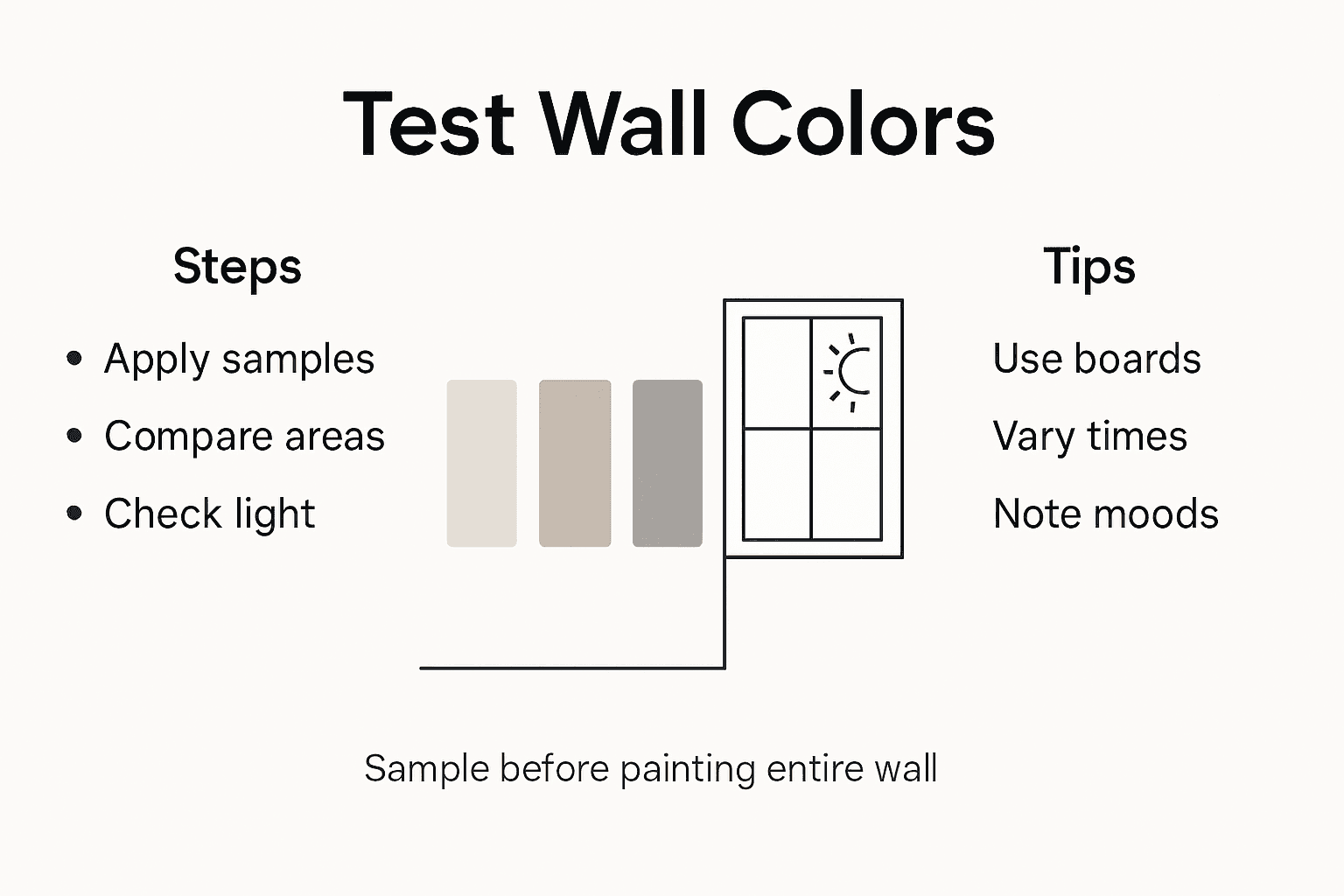
Pro tip: Purchase sample cards with peel and stick backing to easily move and compare color samples without damaging your walls.
Compare paint sample testing methods for a more informed decision:
| Method | Pros | Cons |
|---|---|---|
| Sample cards on wall | Fast, low mess, movable | Limited area, less realistic |
| Paint direct on surface | Realistic, covers full area | More prep, harder to change |
| Poster board testing | Mobile, broad viewing angles | Extra materials required |
Step 5: Finalize Your Wall Color Choice
Consumer research on paint selection reveals that finalizing your wall color is more than a visual decision it is about creating a functional and emotionally resonant space. Take time to review your color samples with a critical and discerning eye, considering how each option performs under different conditions and aligns with your original design goals.
Reflect carefully on the emotional response each color sample evokes. Walk into the room at different times of day and observe how the colors shift with changing light. Pay attention to how the samples interact with your furniture, artwork, and architectural features. A color that looks perfect in the morning might feel different under evening lamplight. Consider the room’s purpose whether it is a relaxing bedroom, an energetic home office, or a welcoming living space will influence your final color selection.
Be prepared to make compromises and trust your instincts. Design professionals recommend a systematic approach to color selection that balances technical considerations with personal intuition. If you find yourself consistently drawn to one color sample over another, that is often a sign you have found the right choice. Remember that wall colors are not just about aesthetics but about creating an environment that feels authentic and meaningful to you.
Pro tip: Purchase a small can of your chosen color and paint a large poster board that can be easily moved around the room to simulate wall coverage and observe color interactions.
Make Your Wall Colors Truly Personal with Meaningful Decor
Choosing the perfect wall color can be challenging when you want your home to reflect your unique story and emotional goals. This article highlights key steps like understanding your room’s lighting, evoking the right feelings with color, and matching tones to your personal themes. Many homeowners struggle to find decor pieces that not only complement their chosen palette but also tell a meaningful narrative.
At FunLifeNow, we specialize in personalized home accents that add heartfelt character and craftsmanship to your space. Our American-made custom blankets, canvas wall art, and metal signs are designed to echo your emotions and memories, perfectly tying into the color atmosphere and story you create on your walls. Whether you want to celebrate a special date, capture a cherished name, or highlight your lifestyle, our products help you transform your home into a true reflection of you.
Start designing your story-driven decor today.

Discover how easy it is to enhance your walls with personalized items that emotionally connect and complete your vision at FunLifeNow. Explore our custom creations and let your home decor make a statement that lasts. Visit FunLifeNow now and turn your wall color choices into cherished memories with meaningful accents.
Frequently Asked Questions
How do I assess lighting and room size when selecting wall colors?
Understanding your room’s lighting and dimensions is essential for choosing the right wall colors. Start by evaluating natural light sources and measuring the room’s size, noting that lighter colors work best in small spaces while larger rooms can accommodate deeper shades.
What should I consider when identifying emotional goals for my wall colors?
Reflect on the feelings and ambiance you want to create in each room. Think about how different colors can evoke specific emotions and select hues that align with your personal experiences or memories.
How can I ensure my wall colors match my existing decor?
Take stock of your current decor by examining the colors of your furniture, rugs, and artwork. Select wall colors that complement these elements, ensuring they create a cohesive and harmonious atmosphere in your space.
What is the best way to test color samples on my walls?
Apply paint samples directly on your wall in different areas to see how they perform under various lighting conditions. Paint sections that are about two feet square to get a realistic view of how each color interacts with the room throughout the day.
How do I make the final decision on my wall color?
Review your color samples critically by observing them at different times of the day and considering how they fit with your room’s purpose. Trust your instincts and choose the color that resonates most with you, ensuring it reflects the atmosphere you want to create in your home.
What tools can I use to visualize my wall color choices?
Create a mood board that includes color swatches, photographs, and meaningful items to help you visualize your desired emotional atmosphere. This will aid in curating a color palette that tells your unique story and enhances your living space.