
Canvas wall art: elevate your home with meaningful decor
You’ve seen it before: a beautiful family photo printed on canvas, hung proudly above a couch, but something feels off. The image is blurry, the edges are awkwardly cropped, or the piece is so small it looks lost on a large wall. Canvas wall art has the power to transform a room and tell your story, but only when you choose and display it correctly. This guide walks you through everything you need to know, from picking the right size and image quality to personalizing a piece that genuinely moves people who walk into your home.
Table of Contents
- What is canvas wall art and why does it matter?
- Choosing the right canvas: size, aspect ratio, and image quality
- Customization and story: bringing meaning to your walls
- Placement, installation, and care: keeping your art vibrant
- What most decorators get wrong about canvas wall art
- Ready to create your own meaningful canvas wall art?
- Frequently asked questions
Key Takeaways
| Point | Details |
|---|---|
| Prioritize image quality | Sharp, high-resolution images prevent pixelation and cropping issues in your canvas art. |
| Choose the right size | Measure your space and use size guides to pick a canvas that fits and enhances your room. |
| Personalize for impact | Customizing canvas wall art with meaningful stories or images creates stronger emotional connections. |
| Proper installation matters | Hang art at eye level, out of direct sunlight, to keep colors vibrant and the display balanced. |
| Care increases longevity | Regular dusting and appropriate placement keep canvas wall art bright for years. |
What is canvas wall art and why does it matter?
Canvas wall art is a print or photograph reproduced on a woven fabric surface, typically stretched over a wooden frame called a stretcher bar. Unlike posters or framed prints behind glass, canvas has a texture and depth that feels warm and organic. It doesn’t produce glare, it doesn’t feel cold, and it carries a sense of craftsmanship that flat prints simply can’t match.
What makes canvas especially powerful for homeowners is its ability to carry meaning. A canvas isn’t just decoration. It’s a conversation starter, a memory anchor, a piece of your family’s story displayed with intention. Think about the difference between a generic landscape print bought at a big-box store and a canvas printed with your grandmother’s handwriting, your wedding coordinates, or a photo from the trip that changed your life. One fills space. The other fills the room with feeling.
Canvas wall art works beautifully for:
- Family portraits and milestone photos that deserve more than a phone screen
- Personalized gifts for weddings, anniversaries, new homes, and birthdays
- Meaningful quotes rendered in custom typography
- Travel memories that bring a place back to life every time you look up
But quality matters enormously. Common canvas printing mistakes include low-resolution images that cause pixelation, mismatched aspect ratios that lead to unwanted cropping, poor canvas tension that causes sagging, and direct sunlight exposure that fades colors over time. Knowing these pitfalls before you order saves you from disappointment.
“The best canvas art doesn’t just decorate a wall. It makes you feel something every time you pass it.”
You can also explore the canvas material pros and cons to understand why canvas outperforms other wall decor options in warmth, longevity, and visual presence. UV-resistant inks and proper frame tension are non-negotiable for pieces you want to last decades, not just a few years.
Choosing the right canvas: size, aspect ratio, and image quality
Understanding the emotional power of canvas art is one thing, but choosing the right piece for your wall means avoiding specific pitfalls. Size and image quality are where most people go wrong, and the mistakes are easy to prevent once you know what to look for.
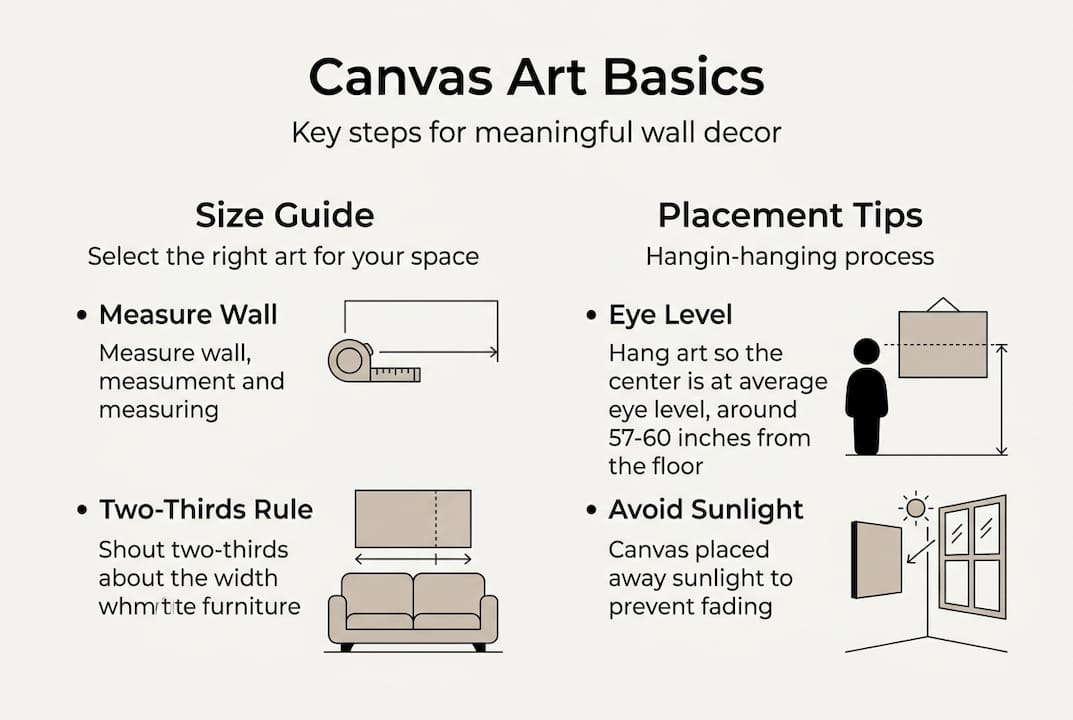
Start by measuring your wall space. A general rule: your canvas should fill roughly two-thirds to three-quarters of the wall width it hangs on. A 12x16 inch canvas on a 10-foot wall looks like a postage stamp. A 36x48 inch piece in the same spot commands attention.
Aspect ratio is equally critical. Mismatched aspect ratios lead to cropping, meaning parts of your image get cut off during printing. Here’s a quick reference:
| Canvas size | Aspect ratio | Best photo source |
|---|---|---|
| 8x10 inches | 4:5 | Portrait smartphone photos |
| 11x14 inches | 11:14 | DSLR landscape shots |
| 16x20 inches | 4:5 | High-res family portraits |
| 20x30 inches | 2:3 | Wide landscape photography |
| 24x36 inches | 2:3 | Professional event photos |
Image resolution is the other big factor. For a sharp, gallery-quality print, follow these steps:
- Use images with at least 150 DPI (dots per inch) at the final print size.
- For canvases larger than 20x24 inches, aim for 300 DPI source files.
- Avoid screenshots or images downloaded from social media, which are typically 72 DPI.
- Request the original file from your photographer whenever possible.
- Use the preview tool offered by your canvas printer to check how the image looks at full size before you order.
Pro Tip: Most reputable canvas printing services offer digital mockup tools. Always use them. They show you exactly how your image will look at the chosen size and catch cropping issues before they become expensive mistakes.
For a deeper breakdown of sizing decisions, the wall art size guide and lasting impact canvas art tips are worth bookmarking before you place any order.
Customization and story: bringing meaning to your walls
With size and quality in mind, the next step is to make the art truly your own, reflecting moments and stories that matter. This is where canvas wall art separates itself from every other form of home decor.
Customization goes far beyond slapping a photo on a canvas. The most meaningful pieces layer elements together: a photo combined with a date, a location, a name, or a short line of text that only your family would understand. These details transform a pretty image into a personal artifact.
Popular ways people personalize their canvas art include:
- Text overlays with names, wedding dates, or meaningful quotes
- Multi-photo collages that tell a story across a single canvas
- Family timelines combining photos from different years in a visual sequence
- Map-based designs showing a meaningful location with coordinates
Here’s a quick guide to matching customization styles with occasions:
| Occasion | Recommended style | Personal touch to add |
|---|---|---|
| Wedding | Couple portrait | Date and location text |
| New home | House illustration or photo | Address or move-in year |
| Milestone birthday | Photo collage | Age and key life moments |
| Anniversary | Favorite shared photo | Years together, first dance lyrics |
| Baby’s first year | Monthly milestone grid | Name and birth details |
The emotional payoff of a well-customized canvas is real. When someone receives a canvas printed with a photo they thought was lost or a quote that speaks directly to their life, the reaction is visceral. It’s not just a gift. It’s proof that someone paid attention.
Practically speaking, the process is straightforward: upload your image, choose your canvas size, add any text or design elements, and use the preview to confirm everything looks right. Using templates and previews is the single best way to avoid printing errors and ensure your vision translates correctly to the final product.
Pro Tip: When combining text and photos, keep text placement away from the image edges. Canvas wraps around the frame, and text near the border can get folded out of sight.
For more ideas on making your canvas truly unforgettable, the lasting impact canvas art tips resource covers advanced personalization strategies worth exploring.
Placement, installation, and care: keeping your art vibrant
Personalized canvases shine brightest with the right placement and care. Even the most stunning piece loses its impact if it’s hung crooked, too high, or in a spot that slowly destroys the print.

Start with location. Avoid walls that receive direct sunlight for extended periods. Direct sunlight fades colors and weakens canvas fibers over time, even with UV-resistant inks. Rooms with north-facing windows or indirect light are ideal. Also avoid hanging canvas near heating vents or in high-humidity spaces like bathrooms, where moisture can loosen the canvas from its frame.
For hanging your canvas securely, follow these steps:
- Find the wall studs using a stud finder for heavier pieces over 20x24 inches.
- Mark your hanging point at eye level, which is typically 57 to 60 inches from the floor to the center of the canvas.
- Use a level to ensure the hanging hardware is perfectly horizontal.
- For lighter canvases, adhesive strips rated for the canvas weight work well on drywall.
- Step back and view the placement from the room’s main entry point before finalizing.
Common placement mistakes to avoid:
- Hanging too high, which creates visual disconnect from the furniture below
- Choosing art that’s too small for the wall, making the space feel empty rather than curated
- Ignoring room scale, where a single small canvas in a large living room looks accidental rather than intentional
For ongoing care, dust your canvas monthly with a soft, dry microfiber cloth. Never use water or cleaning sprays directly on the surface. If the canvas begins to sag, a light misting of water on the back of the canvas (not the front) can help tighten the fabric as it dries.
Pro Tip: Before drilling a single hole, use a digital room planning app or even a paper cutout taped to the wall to visualize exactly how your canvas will look in the space. It takes five minutes and saves you from unnecessary wall damage.
For detailed installation guidance, the how to hang canvas art and hang wall decor tips resources walk you through every step with clarity.
What most decorators get wrong about canvas wall art
After mastering the practical aspects, here’s a perspective that most home decor advice overlooks: the biggest mistake people make with canvas wall art isn’t technical. It’s emotional.
Most decorating guides focus on color matching, size ratios, and gallery wall arrangements. That advice isn’t wrong, but it misses the point entirely. A canvas that perfectly matches your sofa cushions but means nothing to you is just wallpaper with texture. It fills space without filling the room with life.
The homes that feel genuinely warm and memorable aren’t decorated with perfectly coordinated prints. They’re filled with pieces that spark questions. Guests ask, “Where was that taken?” or “Who painted that?” or “What does that date mean?” That curiosity is the real goal of great wall art.
We’ve seen this firsthand: a family who replaced a generic abstract canvas with a printed photo from their first road trip together. Same wall, same frame size. Completely different energy in the room. The space went from styled to lived in, in the best possible way.
The canvas pros and cons discussion is worth revisiting with this lens. Canvas isn’t just a material choice. It’s a commitment to displaying something worth looking at every single day. Choose pieces that earn that daily attention by carrying real meaning, not just aesthetic appeal.
Ready to create your own meaningful canvas wall art?
Inspired to add meaning to your space? At FunLifeNow, we make it easy to turn your favorite photos, quotes, and memories into beautifully crafted canvas art made right here in America.

Our customization tools let you upload your image, preview it at your chosen size, add text overlays, and see exactly how your finished canvas will look before you order. Whether you’re creating a statement piece for your living room or searching for a gift that will genuinely move someone, we’re here to help you get it right. Start designing your custom canvas today and give your walls a story worth telling.
Frequently asked questions
How do I choose the right image for canvas wall art?
Pick a high-resolution photo with an aspect ratio that matches your canvas size. Low-res images cause pixelation and mismatched ratios lead to unwanted cropping that ruins the final print.
Where should I hang my canvas wall art for the best visual impact?
Hang your canvas at eye level, roughly 57 to 60 inches from the floor to the canvas center. Direct sunlight fades colors over time, so choose a wall with indirect or ambient light.
How do I clean and care for canvas wall art?
Dust gently with a soft, dry microfiber cloth on a monthly basis. Sunlight and UV exposure fade colors and weaken the canvas fabric, so keep your art away from direct light and high humidity.
Can I use multiple canvases to create a gallery wall?
Absolutely. Mixing complementary images in varied sizes creates a dynamic, layered gallery wall. Keep spacing consistent at two to three inches between frames for a polished, intentional look.