
Importance of Craftsmanship in Personal Decor
Nearly 60 percent of homeowners say their most cherished decor pieces are those crafted by American artisans. Choosing decor gifts is about more than style, especially when every family gathering calls for something that holds true meaning. Discover how true craftsmanship brings together skill and story, transforming ordinary accents into keepsakes that reflect both individuality and American pride.
Table of Contents
- Craftsmanship Defined In Decor Products
- Types Of Craftsmanship In Home Accents
- Key Qualities Of Skilled Craftsmanship
- Impact On Personalization And Storytelling
- Costs And Value Versus Mass Production
Key Takeaways
| Point | Details |
|---|---|
| Value of Craftsmanship | Handcrafted decor embodies skill and creativity, offering unique pieces that reflect the artisan’s personal story and cultural heritage. |
| Types of Craftsmanship | Home decor craftsmanship includes woodworking, metalcraft, textiles, and ceramics, each with distinct materials and techniques contributing to personal style. |
| Emotional and Personal Connection | Crafted items serve as narrative vessels, allowing homeowners to express their individuality and emotional landscapes through personalized decor. |
| Economic Perspective | Handcrafted decor typically comes at a higher cost but provides superior quality, longevity, and emotional value, distinguishing it from mass-produced items. |
Craftsmanship Defined in Decor Products
Craftsmanship represents a profound commitment to creating products that transcend mere functionality, embodying skill, creativity, and meticulous attention to detail. In the realm of home decor, craftsmanship signifies an artisan’s dedication to producing unique, high-quality items that reflect both technical expertise and aesthetic sensibility.
At its core, craftsmanship distinguishes handmade decor products from mass-produced alternatives by emphasizing manual skill, precision, and individual artistic expression. These products are not simply manufactured but carefully constructed, with each piece telling a story of dedication, technique, and personal investment. Whether it’s a hand-carved wooden sign, a custom metal wall accent, or a personalized canvas, crafted decor items carry an inherent authenticity that machine-made products cannot replicate.
The value of craftsmanship extends beyond visual appeal. Each carefully created piece represents hours of training, practice, and nuanced understanding of materials and techniques. American artisans often bring generational knowledge and regional design traditions into their work, transforming simple objects into meaningful cultural artifacts that connect homeowners to broader artistic narratives.
Pro Tip: When selecting crafted decor, examine the details closely and ask about the maker’s process to truly appreciate the skill and story behind each unique piece.
Types of Craftsmanship in Home Accents
Home decor craftsmanship encompasses several distinct styles that reflect unique artistic traditions and technical approaches. The American Craftsman style stands out as a particularly influential approach, emphasizing handwork, natural materials, and simplified design aesthetics that prioritize skilled manual creation over mass-produced alternatives.
Different craftsmanship types in home accents include woodworking, metalcraft, textile art, and ceramic design. Woodworking represents a classic form of craftsmanship, with artisans creating intricate furniture, wall hangings, and decorative objects using traditional techniques like hand-carving, joinery, and detailed wood finishing. Metalcraft involves creating custom wall art, decorative signs, and sculptural pieces through techniques such as welding, hammering, and precise metalworking that showcase individual artistic vision.
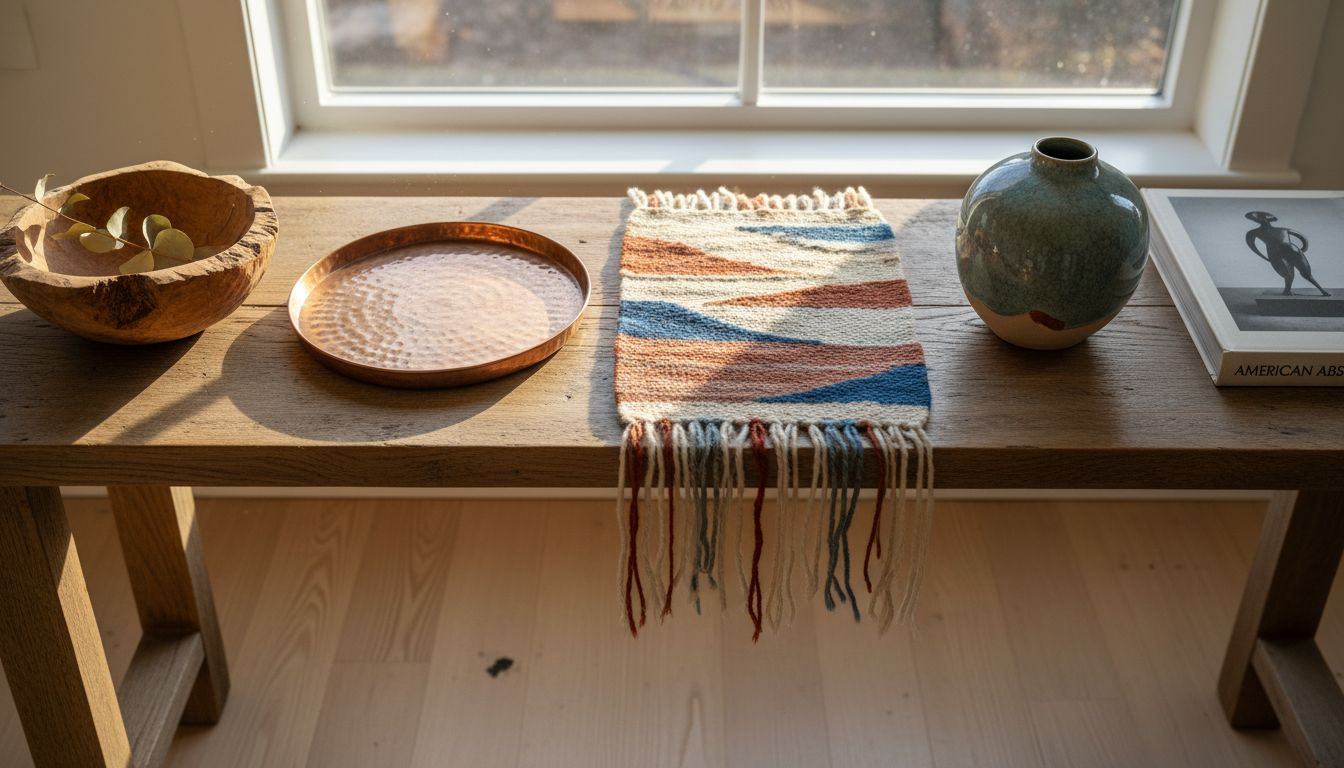
Textile craftsmanship offers another rich dimension of home decor, featuring hand-woven blankets, embroidered wall hangings, and custom-designed fabric art. Ceramic craftsmanship includes hand-thrown pottery, custom ceramic wall installations, and intricately designed decorative pieces that transform functional objects into artistic statements. Each craft discipline brings its own unique aesthetic and storytelling potential to home decor, allowing homeowners to curate spaces that reflect personal style and appreciation for skilled artistic work.
Here’s how different home decor craftsmanship types compare in their materials, techniques, and common uses:
| Craft Type | Main Materials | Key Techniques | Typical Home Uses |
|---|---|---|---|
| Woodworking | Hardwood, pine, oak | Hand-carving, joinery | Furniture, wall accents, signage |
| Metalcraft | Steel, copper, brass | Welding, hammering | Sculptures, wall art, decor signs |
| Textiles | Cotton, wool, linen | Weaving, embroidery | Blankets, tapestries, pillows |
| Ceramics | Clay, porcelain | Throwing, glazing | Pottery, wall installations |
Pro Tip: When selecting crafted home accents, examine the maker’s technique and understand the specific craft tradition behind each piece to truly appreciate its artistic value.
Key Qualities of Skilled Craftsmanship
Skilled craftsmanship represents a complex interplay of technical expertise, creative vision, and unwavering dedication to quality. Craftsmanship spirit goes beyond mere technical proficiency, embodying an innovative approach that combines traditional knowledge with contemporary design sensibilities. Craftsmen demonstrate remarkable self-efficacy, consistently pushing the boundaries of their chosen artistic discipline while maintaining a deep commitment to continuous skill improvement.
Precision and care form the foundational pillars of exceptional craftsmanship. Expert artisans invest substantial time mastering intricate techniques, developing an almost intuitive understanding of their materials and tools. This mastery allows them to transform raw materials into extraordinary pieces that transcend functional utility, creating objects with emotional resonance and aesthetic complexity. Their work is characterized by meticulous attention to detail, where each subtle nuance reflects years of dedicated practice and profound understanding.
The communication aspect of craftsmanship extends beyond visual representation, encompassing a deeper narrative of cultural expression and personal artistic journey. Skilled craftsmen communicate through tactile experiences, inviting viewers and users to connect with their work on multiple sensory levels. Their creations tell stories of tradition, innovation, and individual artistic vision, bridging the gap between functional design and profound artistic expression.
Pro Tip: When appreciating crafted items, look beyond surface aesthetics and examine the subtle details that reveal the maker’s skill and creative intent.
Impact on Personalization and Storytelling
Craftsmanship transforms home decor from mere objects into powerful narrative vessels that capture personal histories and emotional landscapes. Handmade products meet modern desires for uniqueness, allowing individuals to curate spaces that reflect their most intimate stories and cultural identities. Each crafted piece becomes a tangible representation of personal experience, bridging generational memories and individual expression.
Beyond aesthetic appeal, crafted decor items serve as symbolic repositories of human emotion and intention. The production method itself instills an authenticity that mass-produced items cannot replicate, embedding the maker’s passion and individual artistry into every curve, texture, and detail. These objects transcend their physical form, becoming conduits of personal narrative that communicate complex emotional landscapes through their design, materials, and intricate craftsmanship.
Personalization through craftsmanship allows homeowners to create deeply meaningful environments that tell their unique stories. Whether it’s a hand-carved wooden sign commemorating a family milestone, a custom metal wall art piece representing personal achievements, or a textile creation reflecting cultural heritage, these items transform living spaces into dynamic autobiographical canvases. Each carefully crafted element becomes a conversation starter, inviting viewers to explore the rich personal narratives woven into the home’s decor.
Pro Tip: Select crafted decor pieces that resonate with your personal story and create intentional spaces that reflect your individual journey and emotional landscape.
Costs and Value Versus Mass Production
The economic landscape of craftsmanship reveals a nuanced perspective on value that extends far beyond simple price comparisons. Handmade craftsmanship typically incurs higher costs due to labor-intensive production processes, specialized skills, and the use of premium materials. These increased expenses reflect a commitment to quality that mass production cannot replicate, creating items with intrinsic value that transcends their monetary price tag.
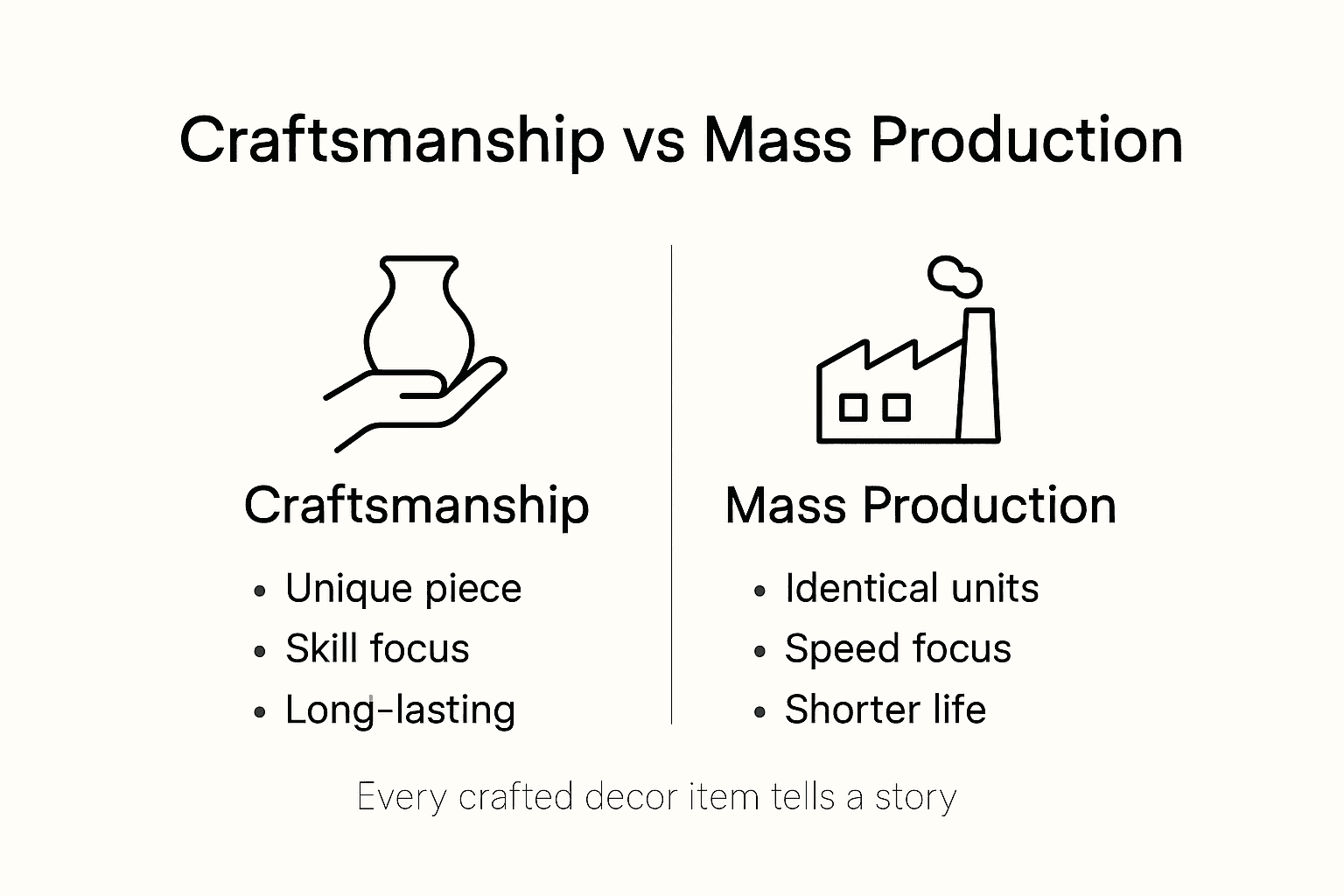
Consumers increasingly recognize that crafted decor represents an investment in artistry, emotional connection, and long-term durability. While machine-produced items offer lower upfront costs, handcrafted pieces provide superior longevity, unique aesthetic qualities, and a sense of personal narrative that cannot be mechanically duplicated. The additional expense associated with craftsmanship translates into products that carry deeper meaning, cultural significance, and individual artistic expression.
The value proposition of handcrafted decor extends beyond mere economic calculation. Each piece represents a complex interplay of human skill, creative vision, and cultural heritage. Artisans invest substantial time developing techniques passed through generations, transforming raw materials into objects that carry emotional resonance. This approach creates decor items that are not just purchased, but collected and cherished as meaningful representations of artistic tradition and personal storytelling.
Pro Tip: When evaluating home decor investments, consider the long-term value of crafted pieces beyond their initial price, focusing on quality, emotional significance, and potential to become treasured family heirlooms.
This table outlines the major differences in value between handcrafted and mass-produced decor items:
| Aspect | Handcrafted Decor | Mass-Produced Decor |
|---|---|---|
| Price | Higher, reflects artisanship | Lower, due to scale efficiencies |
| Uniqueness | Each piece is unique | Items are identical |
| Longevity | Built for durability | May wear out quickly |
| Emotional Value | Personal, story-driven | Lacks individual connection |
Celebrate True Craftsmanship with Personalized Decor That Tells Your Story
The article highlights the challenge many face when seeking authentic decor that combines skilled craftsmanship with personal meaning. You want unique handmade pieces that go beyond mass production and carry emotional value through storytelling and expert creativity. At FunLifeNow, we understand how important it is to connect your living space with decor that reflects your personal journey, cultural heritage, and treasured memories. Our American-made customizable products like hand-crafted blankets, custom canvas wall art, and metal signs are designed to showcase the craftsmanship spirit and offer lasting quality that honors tradition and innovation.

Now is the perfect time to turn your home into a meaningful gallery of your life with pieces that celebrate your story and craftsmanship values. Explore our personalized home decor collection and discover how each item can be tailored with your names, dates, and heartfelt messages to create a truly unique atmosphere. Bring home artistry that lasts by visiting FunLifeNow.com today and start customizing decor that resonates emotionally and artistically.
Frequently Asked Questions
What defines craftsmanship in personal decor?
Craftsmanship in personal decor denotes the skill, creativity, and attention to detail that artisans put into handmade products, making them distinct from mass-produced items. Each crafted piece often tells a story, showcasing individual artistry and cultural significance.
How can I identify quality craftsmanship in home decor items?
To identify quality craftsmanship, closely examine details such as materials, techniques, and finishing. Ask about the maker’s process and background to understand the skill and tradition involved in the creation of the piece, which enhances its value and authenticity.
What are the benefits of choosing handcrafted decor over mass-produced items?
Handcrafted decor offers unique aesthetic qualities, superior durability, and emotional significance that mass-produced items often lack. Each crafted piece carries a personal narrative, connecting the owner to the artisan’s story and cultural heritage.
How does craftsmanship impact the value of home decor?
Craftsmanship elevates the value of home decor by reflecting the time, skill, and materials invested in creating each piece. While handcrafted items may come with higher upfront costs, they typically provide long-term durability and deeper personal connection, making them cherished items in a home.