
How to Make a House Feel Homey With Personalized Decor
Finding the right balance between cozy and personal can sometimes feel overwhelming when turning a house into a home. Comfort is more than just temperature control—it is about building an environment that reflects your story and feels deeply inviting. By focusing on personalized American-made decor and smart space assessments, you can craft a living space that truly supports your lifestyle and makes every family occasion feel special.
Table of Contents
- Step 1: Assess Your Home’s Comfort Zones
- Step 2: Select Meaningful Personalized Decor
- Step 3: Arrange And Layer Custom Textiles
- Step 4: Enhance Walls With Story-Driven Art
- Step 5: Review And Refine Your Cozy Spaces
Quick Summary
| Important Insight | Explanation |
|---|---|
| 1. Assess Your Home’s Comfort Zones | Understand temperature, light, and noise levels in each room to identify areas for improvement. |
| 2. Select Meaningful Personalized Decor | Choose decor that reflects your personal history and values for a comforting atmosphere. |
| 3. Master Textile Layering | Use different textiles to enhance warmth and comfort, contributing to a cozy home environment. |
| 4. Create Story-Driven Wall Art | Curate art that resonates with your personal journey, adding depth and emotional connection to walls. |
| 5. Regularly Review and Refine Spaces | Conduct periodic assessments of your home to ensure it continues to meet your evolving comfort needs. |
Step 1: Assess your home’s comfort zones
Creating a truly homey environment starts with understanding the unique comfort dynamics of your living space. Conducting a thorough assessment of your home’s comfort zones helps you identify areas that need personalization and improvement, transforming a generic house into a warm, inviting sanctuary.
Begin by examining each room’s thermal comfort levels using indoor environmental assessment techniques. This involves analyzing temperature, humidity, air circulation, and how different spaces make you feel. The U.S. Department of Energy recommends performing a comprehensive home energy audit to pinpoint potential comfort disruptions.
To systematically evaluate your home’s comfort zones, consider these key areas:
- Temperature variations between rooms
- Natural light exposure
- Noise levels
- Furniture arrangement
- Overall sensory experience
Pay special attention to spaces where you spend the most time, such as your living room, bedroom, and home office. Notice how the current layout, lighting, and temperature impact your emotional and physical comfort.
Comfort is not just about temperature - it’s about creating an environment that feels uniquely yours.
Pro tip: Use a digital thermometer and keep a comfort journal for a week to track how different rooms make you feel throughout the day.
Step 2: Select meaningful personalized decor
Personalizing your home decor goes beyond simply choosing attractive items - it’s about creating a space that tells your unique story and reflects your emotional landscape. Home design research emphasizes that comfort includes psychological dimensions that transform a house into a true home.
When selecting meaningful decor, focus on items that connect deeply with your personal history, values, and experiences. The U.S. Department of Energy suggests choosing design elements that authentically represent your personality and lifestyle, creating an environment that supports your emotional well-being.
Consider these strategies for selecting personalized decor:
- Display family photographs with custom frames
- Showcase travel mementos from significant trips
- Incorporate artwork that resonates with your personal journey
- Use heirloom pieces that carry family history
- Create gallery walls featuring meaningful moments
Meaningful decor transforms empty spaces into personal narratives, telling the story of who you are.
Pay attention to the emotional resonance of each item. A single photograph, a handcrafted item, or a cherished gift can become a powerful anchor that makes your space feel authentically yours.
Pro tip: Choose decor pieces that spark joy and provoke positive memories, creating a home that feels like a true reflection of your inner world.
Step 3: Arrange and layer custom textiles
Transforming your home into a cozy sanctuary begins with mastering the art of textile layering. Home comfort strategies reveal that thoughtful textile placement goes beyond aesthetic appeal, contributing to thermal comfort and creating inviting spaces.
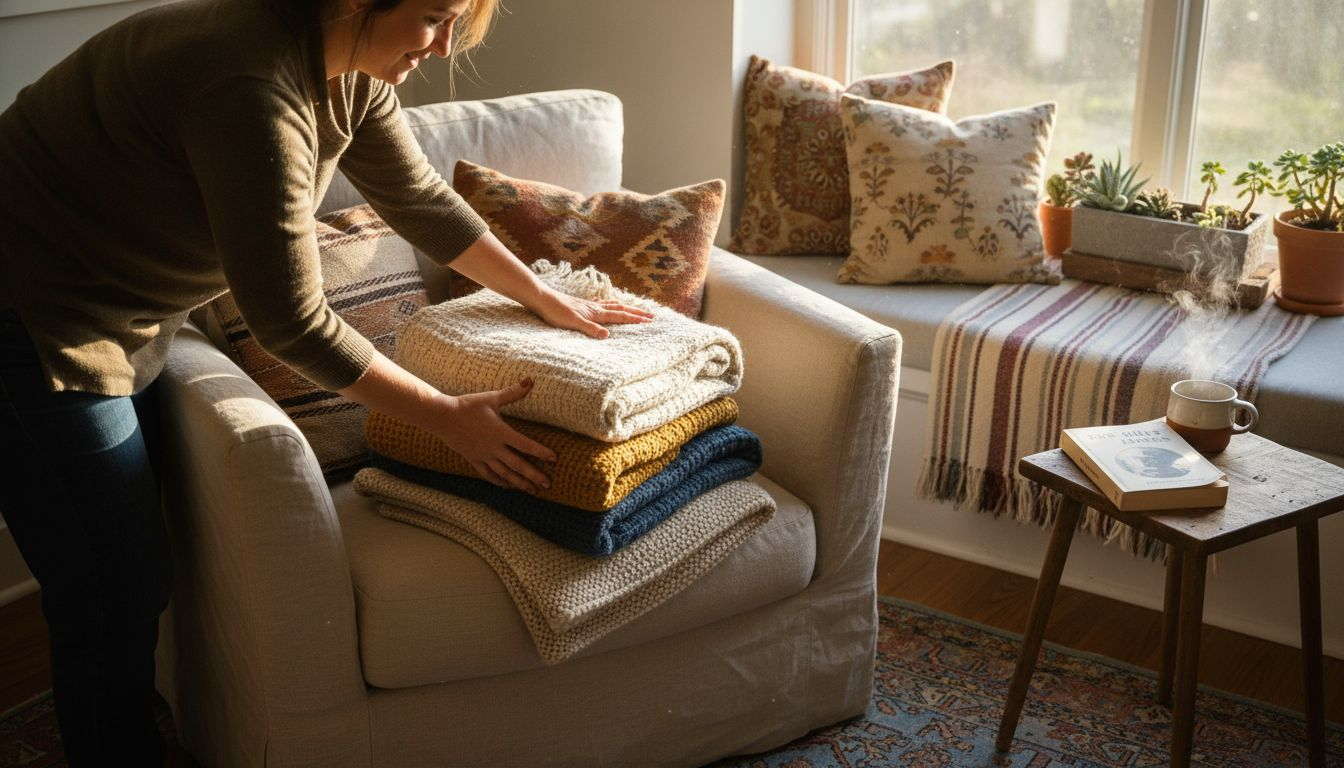
Custom textiles offer a powerful way to personalize your environment while enhancing functional comfort. The Energy Star guidelines highlight how strategic textile incorporation can improve both thermal performance and interior design, making your space feel uniquely yours.
Consider these textile layering techniques:
- Mix textures like chunky knit throws with smooth cotton pillows
- Coordinate color palettes across different textile elements
- Use area rugs to define spaces and add warmth
- Combine lightweight curtains with heavier drapes for depth
- Layer throw blankets in complementary tones
Textiles are the storytellers of your home, weaving comfort and personality into every corner.
Focus on creating visual and tactile depth by combining different fabric weights, patterns, and textures. A well-layered textile collection transforms a room from generic to genuinely personal.
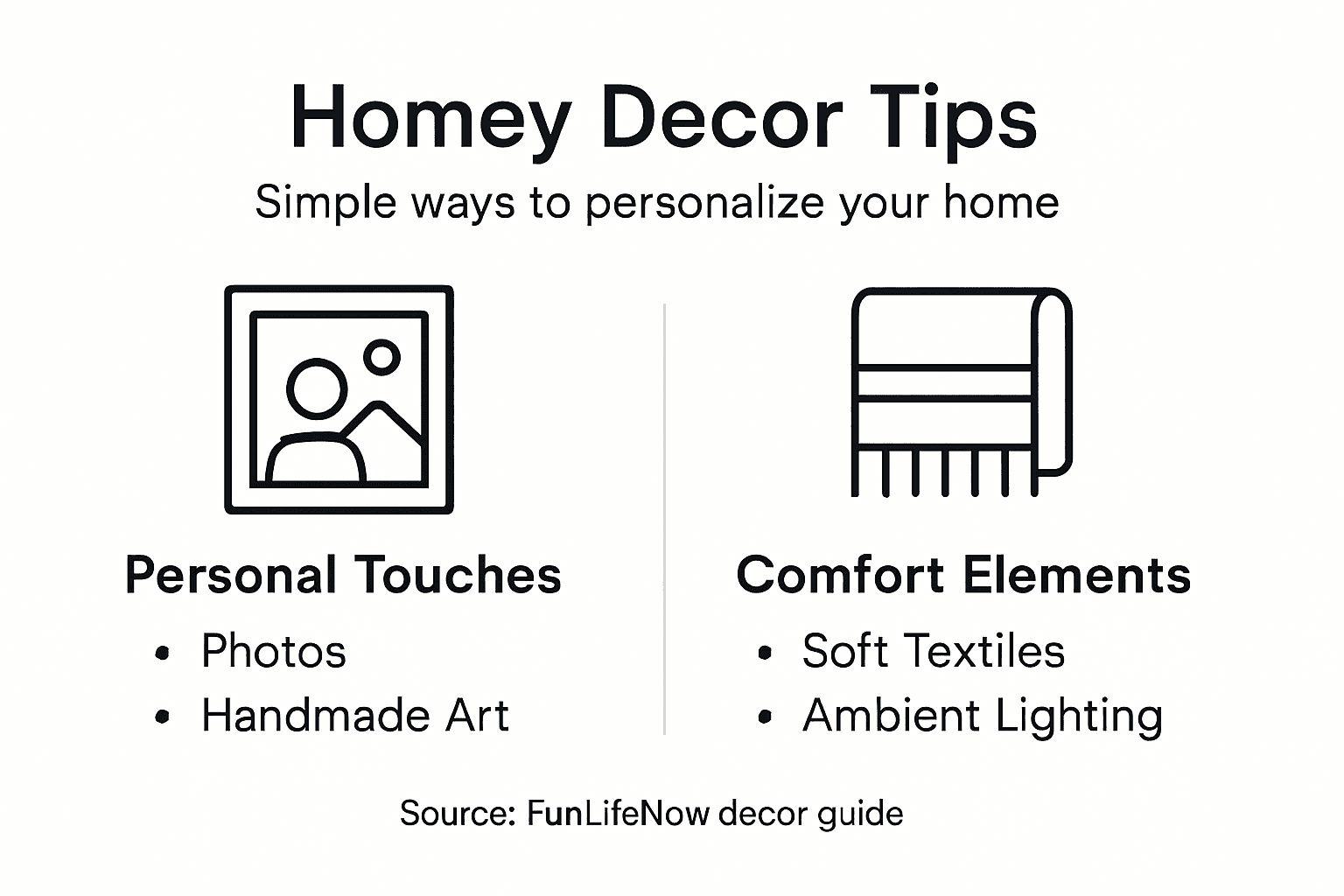
Pro tip: Select textiles that not only look beautiful but feel amazing, creating sensory experiences that make your home feel truly comfortable and inviting.
Step 4: Enhance walls with story-driven art
Transforming bare walls into meaningful narratives requires more than just hanging random artwork. Residential comfort research demonstrates that walls can become powerful emotional canvases that reflect personal identity and create a sense of belonging.
The U.S. Department of Energy emphasizes that wall art goes beyond visual aesthetics, serving as a critical element in making a house feel like a genuine home. Each piece you choose should resonate with your personal journey, memories, and emotional landscape.
Consider these approaches for curating story-driven wall art:
- Display family photographs in coordinated gallery layouts
- Showcase travel maps or destination mementos
- Create collages representing personal milestones
- Incorporate artwork that reflects your cultural heritage
- Select pieces that spark meaningful conversations
Walls are silent storytellers, waiting to share the chapters of your life.
Focus on creating visual connections between your art pieces. Mix different frame styles, sizes, and orientations to create a dynamic, personalized display that feels authentic and deeply personal.
Pro tip: Rotate your wall art periodically to keep your space feeling fresh and allow different stories to emerge over time.
Step 5: Review and refine your cozy spaces
Creating a truly homey environment is an ongoing journey of discovery and personal adaptation. Home comfort assessments provide critical insights into how your living spaces genuinely feel and function, helping you make informed adjustments that transform a house into a personalized sanctuary.
Research emphasizes the importance of subjective comfort evaluation, highlighting that comfort is deeply personal and continually evolving. This means your cozy spaces should be dynamic, changing with your lifestyle, emotional needs, and aesthetic preferences.
Consider these strategies for reviewing and refining your spaces:
- Conduct a quarterly comfort walkthrough of your home
- Photograph each room to gain an objective perspective
- Note areas that feel uncomfortable or lack personal connection
- Identify spaces that drain versus energize your mood
- Track how lighting, furniture placement, and decor impact your well-being
Your home is a living canvas, constantly waiting to be reimagined and refreshed.
Remember that refinement is not about perfection, but about creating spaces that authentically reflect and support your unique lifestyle and emotional landscape.
Pro tip: Keep a dedicated journal documenting how different design changes make you feel, creating a personalized roadmap for your home’s evolution.
This summary highlights ways to track and refine your home’s comfort:
| Method | Goal | What to Track |
|---|---|---|
| Comfort Journal | Monitor emotional responses | Mood changes by room |
| Quarterly Home Walkthrough | Spot areas needing improvement | Lighting, noise, arrangement |
| Room Photography | Gain new perspectives | Visual comfort and clutter |
| Design Change Tracking | Assess impact over time | Mood before and after updates |
Here’s a comparison of how different elements contribute to overall home comfort:
| Element | Physical Impact | Emotional Benefit | Easy Improvement Tip |
|---|---|---|---|
| Temperature Control | Maintains consistent climate | Enhances relaxation | Add smart thermostats |
| Personalized Decor | Visually enhances space | Reflects personal identity | Display meaningful objects |
| Custom Textiles | Adds warmth and softness | Boosts sense of coziness | Layer throws and pillows |
| Wall Art | Makes walls visually dynamic | Tells your life story | Rotate art seasonally |
| Arrangement Review | Optimizes functional use | Adapts to changing needs | Schedule regular walkthroughs |
Make Every Corner of Your Home Truly Yours with Personalized Decor
The challenge of turning a house into a home lies in creating spaces that tell your story and reflect what matters most to you. As highlighted in the article “How to Make a House Feel Homey With Personalized Decor,” meaningful decor that connects deeply with your personal history and emotional landscape can transform ordinary rooms into cozy sanctuaries. Whether it is layering custom textiles or enhancing walls with story-driven art, the goal is to craft a space that feels uniquely comfortable and authentic.

Bring your vision to life with FunLifeNow, an e-commerce destination specializing in American-made personalized home accents that fuse craftsmanship with emotional storytelling. Explore custom blankets, canvas wall art, and metal signs designed to showcase names, dates, and heartfelt messages that resonate with your lifestyle. Start making your house feel like home today by visiting our homepage and discover how simple, meaningful touches can create lasting comfort. Dont wait to enrich your living spaces with decor that truly speaks to you.
Frequently Asked Questions
How can I assess my home’s comfort zones?
Begin by examining each room’s temperature, natural light, noise levels, and overall atmosphere. Conduct a comfort walkthrough and take notes on how each area feels to identify spaces that need improvement.
What kind of personalized decor should I choose to make my home feel cozy?
Select items that resonate with your personal history, such as family photographs, travel mementos, or artwork that reflects your experiences. Focus on incorporating elements that tell your unique story and evoke positive memories.
How do I layer textiles effectively for a homier feel?
Mix different textures, colors, and fabric weights to create a cozy atmosphere. Consider layering items like chunky blankets with soft pillows and using area rugs to define spaces and add warmth.
What types of wall art are best for personalizing my home?
Choose wall art that reflects your values and life experiences, such as family photos or cultural pieces. Curate a gallery that tells a story, using a combination of frame styles and sizes for visual interest.
How often should I review and refine my home’s comfort spaces?
Conduct a comfort assessment quarterly to ensure your home stays aligned with your emotional and aesthetic needs. Take photographs of each room to evaluate changes and identify areas for improvement, making adjustments as necessary.